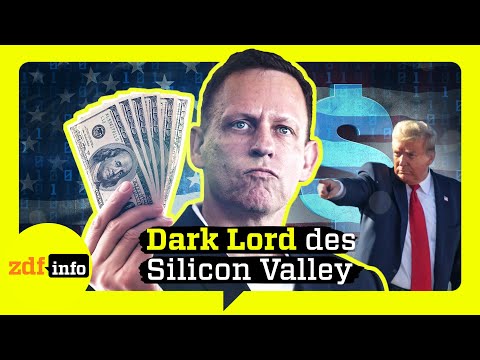
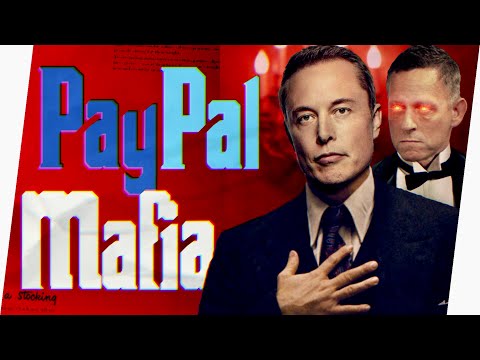
The term "PayPal Mafia" refers to the former founders and employees of the digital payment service Paypal, who, after their departure or after the sale of Paypal to ebay, founded a number of other digital companies or contributed to their founding. This usually happened through the provision of (venture) capital that was made available for the founding.
Elon Musk
One of the most well-known figures of the "PayPal Mafia" is certainly Elon Musk. Elon Musk invested a large part of the money he received from the sale of Paypal to found the company SpaceX. In 2004, Elon Musk joined the company Tesla, founded by Martin Eberhard and Marc Tarpenning, becoming the majority owner and chairman of Tesla. This was followed by involvement in SolarCity, co-founding OpenAI (after joining DeepMind in 2012), and founding Neuralink and The Boring Company (2016), as well as the acquisition of Twitter in 2022 and the related founding of the X Corporation and founding of xAI in 2023.
Elon Musk has also invested in Stripe[1] and possibly in a number of other companies.
In 2024, Musk also began to publicly intervene in the 2024 U.S. presidential election campaign and to promote the election of Donald Trump. For this, he used his platform X and also appeared at campaign events. He also founded the campaign organization "America PAC," which was financially supported by Joe Lonsdale and Ken Howery.
Peter Thiel
The Paypal co-founder Peter Thiel is also politically active. During his philosophy studies at Stanford University in 1987, he co-founded the conservative-libertarian magazine "The Stanford Review," where he served as editor-in-chief until his graduation in 1989. In the early 1990s, he wrote speeches for U.S. Secretary of Education William Bennett.
In 1995, Peter Thiel and David O.Sachs co-wrote the book "The Diversity Myth"[2] , in which they criticized multiculturalism and political correctness in higher education.
In 2007, Peter Thiel supported Ron Paul in the presidential election and subsequently John McCain. In 2012, Thiel together with Luke Nosek and Scott Banister supported the Endorse Liberty Super PAC, again to promote Ron Paul.
Thiel financed the campaign of J.D. Vance and supported the Republican Donald Trump in the 2016 U.S. presidential elections.
Peter Thiel is a transhumanist and pursues an anti-democratic and anti-state agenda. He wants to reduce the state to minimal functions such as property protection and suppression of uprisings, feeling hindered in his "entrepreneurial genius" by government regulations and democratic processes.
After the sale of Paypal, Peter Thiel primarily founded venture capital firms and invested in a wide variety of companies.
Already in 2002, Thiel founded Clarium Capital Management LLC, an investment management and hedge fund firm.
In 2005, Peter Thiel co-founded the Founders Fund together with Ken Howery and Luke Nosek, another venture capital company. The Founders Fund has invested in many firms, including Palantir, SpaceX, Neuralink, The Boring Company, Facebook, airbnb, Stripe, and many others.
In 2010, Peter Thiel founded Valar Ventures, and in 2012, he co-founded Mithril Capital. From 2015 to 2017, he was a partner at Y Combinator, another venture capital firm focusing on startups, which has so far been involved in over 4,000 company foundations through capital provision.
Peter Thiel is co-founder of Palantir Technologies and sat on the board of Facebook, from which he stepped down in 2022 to engage more politically. In February 2022, Thiel was one of the largest donors to Republican candidates in campaigns with contributions exceeding 20.4 million dollars.
The candidates supported by Thiel, Blake Masters and J.D. Vance, were previously tech investors who had worked for Thiel.
Max Levchin
Max Levchin grew up in Ukraine and then studied computer science at the University of Illinois in the USA.
In the summer of 1995, Max Levchin, Luke Nosek, and Scott Banister founded the advertising company SponsorNet New Media.
Max Levchin and Peter Thiel met in the late 1990s and in 1998 founded the company Fieldlink, a security firm that allowed users to store their data encrypted on their Palm Pilots or other PDA (Personal Digital Assistant) devices.
Later, Fieldlink was renamed Confinity and the product "Paypal" was developed, enabling digital money transfers with PDA devices.
Confinity Inc. received about 5 million dollars in venture capital from a group of investors including Nokia Corp.'s "NOK" venture fund, Nokia Ventures, Deutsche Bank, and Bell Melton, founder of CyberCash.[3]
In 2000, Confinity Inc. merged with x.com from Elon Musk to become Paypal Inc.
Levchin is especially known for his contributions to Paypal's anti-fraud system. He also developed the first commercially used form of Captcha.
In 2005, Max Levchin founded the company Slide Inc. and invested in Yelp. Slide was acquired by Google in 2010.
In 2012, Levchin co-founded affirm Inc., which offers online financial services such as "buy now, pay later."
David O. Sacks
David O. Sacks, like Elon Musk, comes from South Africa.
David O. Sacks and Peter Thiel already knew each other from their Stanford University days, where David O. Sacks wrote for the Stanford Review[4] , which was founded by Peter Thiel.[5] In 1999, David O. Sacks joined Confinity Inc. and became product leader of the product "Paypal". After the founding of Paypal Inc., he became COO of the company.[6]
In 2006, David O. Sacks founded the company Geni.com. In 2007, Sacks spun off the communication tool developed for internal use into a separate company called Yammer. Geni.com was sold to MyHeritage in 2012, and Yammer was acquired by Microsoft. [7]
David O. Sacks supported Donald Trump’s 2024 election campaign. In return, Trump announced plans to appoint Sacks as the government’s commissioner for Artificial Intelligence and cryptocurrencies.
Steve Chen
Steve Chen, like Max Levchin, studied computer science at the University of Illinois. In 1999, Max Levchin recruited computer science talent from the University of Illinois for the company Confinity to work on the product Paypal. He recruited several students from the university who then moved to Silicon Valley. Chen was among them.
Steve Chen worked for Paypal from 1999 to 2005. [8]
There he met Jawed Karim and Chad Hurley. The three founded YouTube in 2005. YouTube was originally conceived as a video-based dating site. However, the concept did not succeed: nobody wanted to upload videos
of themselves on the dating platform. Therefore, the three changed the concept. They took the technical infrastructure as a base and expanded the application scope so that any kind of video could be uploaded — and it became very successful. By enabling videos to be shared on other platforms like MySpace, user numbers kept rising. [9]
In 2006, Steve Chen and Chad Hurley sold YouTube to Google for 1.65 billion USD.
Chad Hurley
After the sale of YouTube, Chad Hurley remained its CEO until October 2010.
In 2011, Chad Hurley, Steve Chen, and Vijay Karunamurthy founded the company AVOS Systems Inc.
In 2013, Chad Hurley and Steve Chen founded MixBit, a video sharing service that enables video editing with smartphones.
Hurley has invested in a number of sports teams, including the US Formula 1 team, the NBA’s Golden State Warriors, and the MLS Los Angeles Football Club.
Jawed Karim
Jawed Karim was recruited for Paypal by Max Levchin like Steve Chen and co-founded YouTube together with Steve Chen and Chad Hurley, whom he met at Paypal. However, Jawed Karim enrolled as a computer science student at Stanford University after YouTube's development was complete and remained only as a consultant to YouTube.
As a result, he took a much smaller share in the company compared to Hurley and Chen.
Despite his smaller share, the sale of YouTube was still lucrative enough to earn him 137,443 shares worth about 64 million USD based on Google’s closing price at the time.
In March 2008, Karim, together with Keith Rabois and Kevin Hartz, founded a venture fund called Youniversity Ventures (today YVentures). The company was one of the first to invest in airbnb. YVentures also invested in Palantir, Reddit, and Eventbrite. [10]
Reid Hoffman
Reid Hoffman co-founded SocialNet.com in 1997. At the time of Paypal's founding, he was a member of the company’s board. In January 2000, he left SocialNet and joined Paypal full-time as COO. In June 2000, after a reorganization of the management structure by then CEO Elon Musk, Hoffman became Senior Vice President of Business Development at Paypal. [11]
In December 2002, Reid Hoffman founded LinkedIn with two former SocialNet colleagues and one former Fujitsu colleague. The platform went online on 05.05.2003. Peter Thiel invested in LinkedIn.
Reid Hoffman invested in the founding of OpenAI and joined the company’s board in 2008.
In June 2016, LinkedIn was acquired by Microsoft.
In March 2022, Hoffman, together with his friend Mustafa Suleyman, co-founder of DeepMind, founded Inflection AI, specializing in artificial intelligence and developing software to simplify communication between humans and computers.
Reid Hoffman is considered one of Silicon Valley’s most active angel investors. Along with Peter Thiel, he was one of the first investors in Facebook.
In 2009, Hoffman joined the venture capital firm Greylock Partners, since then providing capital for companies in various industries. Reid Hoffman has served on several corporate boards and supports cryptocurrency.
Premal Shah
Premal Shah was born in India and grew up in Minnesota. He studied economics at Stanford University. Due to his experiences growing up in India, he became particularly interested in microloans.
Shah was one of the first employees at Paypal and was hired as a product manager. In his fifth year at Paypal, he took a sabbatical and went to India to work in microfinance. After returning to Silicon Valley, he co-founded the organization Kiva with Matt Flannery and Jessica Jackley, which provides microloans and of which he is president. Kiva was/is a partner of ID2020.
Shah also sits on the boards of other nonprofit organizations such as the Center for Humane Technology, the Change.org Foundation, Watsi, and VolunteerMatch.
Premal Shah is also a co-founder of renewables.org, an investment platform for renewable energies in emerging markets. [12] [1] Wikipedia: Stripe, last accessed 02.01.2024[2] David O Sacks, Peter A Thiel: The Diversity Myth, published on 1.1.1999, Publisher: Independent Institute, ISBN-13: 9780945999768[3] Source: CNBC, September 8, 1999 "Beam Me Up Some Cash" by Hal Plotkin[4] Fortune, 8.12.2024; accessed 02.01.2025[5] Wikipedia, accessed 02.01.2025[6] Wikipedia, accessed 02.01.2025[7] Wikipedia, accessed 02.01.2025[8] Taiwan Business Topics, accessed 02.01.2025[9] Taiwan Business Topics, accessed 02.01.2025[10] Wikipedia, accessed 02.01.2025[11] Wikipedia, accessed 02.01.2025[12] Wikipedia, accessed 03.01.2025
Elon Musk
One of the most well-known figures of the "PayPal Mafia" is certainly Elon Musk. Elon Musk invested a large part of the money he received from the sale of Paypal to found the company SpaceX. In 2004, Elon Musk joined the company Tesla, founded by Martin Eberhard and Marc Tarpenning, becoming the majority owner and chairman of Tesla. This was followed by involvement in SolarCity, co-founding OpenAI (after joining DeepMind in 2012), and founding Neuralink and The Boring Company (2016), as well as the acquisition of Twitter in 2022 and the related founding of the X Corporation and founding of xAI in 2023.
Elon Musk has also invested in Stripe[1] and possibly in a number of other companies.
In 2024, Musk also began to publicly intervene in the 2024 U.S. presidential election campaign and to promote the election of Donald Trump. For this, he used his platform X and also appeared at campaign events. He also founded the campaign organization "America PAC," which was financially supported by Joe Lonsdale and Ken Howery.
Peter Thiel
The Paypal co-founder Peter Thiel is also politically active. During his philosophy studies at Stanford University in 1987, he co-founded the conservative-libertarian magazine "The Stanford Review," where he served as editor-in-chief until his graduation in 1989. In the early 1990s, he wrote speeches for U.S. Secretary of Education William Bennett.
In 1995, Peter Thiel and David O.Sachs co-wrote the book "The Diversity Myth"[2] , in which they criticized multiculturalism and political correctness in higher education.
In 2007, Peter Thiel supported Ron Paul in the presidential election and subsequently John McCain. In 2012, Thiel together with Luke Nosek and Scott Banister supported the Endorse Liberty Super PAC, again to promote Ron Paul.
Thiel financed the campaign of J.D. Vance and supported the Republican Donald Trump in the 2016 U.S. presidential elections.
Peter Thiel is a transhumanist and pursues an anti-democratic and anti-state agenda. He wants to reduce the state to minimal functions such as property protection and suppression of uprisings, feeling hindered in his "entrepreneurial genius" by government regulations and democratic processes.
After the sale of Paypal, Peter Thiel primarily founded venture capital firms and invested in a wide variety of companies.
Already in 2002, Thiel founded Clarium Capital Management LLC, an investment management and hedge fund firm.
In 2005, Peter Thiel co-founded the Founders Fund together with Ken Howery and Luke Nosek, another venture capital company. The Founders Fund has invested in many firms, including Palantir, SpaceX, Neuralink, The Boring Company, Facebook, airbnb, Stripe, and many others.
In 2010, Peter Thiel founded Valar Ventures, and in 2012, he co-founded Mithril Capital. From 2015 to 2017, he was a partner at Y Combinator, another venture capital firm focusing on startups, which has so far been involved in over 4,000 company foundations through capital provision.
Peter Thiel is co-founder of Palantir Technologies and sat on the board of Facebook, from which he stepped down in 2022 to engage more politically. In February 2022, Thiel was one of the largest donors to Republican candidates in campaigns with contributions exceeding 20.4 million dollars.
The candidates supported by Thiel, Blake Masters and J.D. Vance, were previously tech investors who had worked for Thiel.
Max Levchin
Max Levchin grew up in Ukraine and then studied computer science at the University of Illinois in the USA.
In the summer of 1995, Max Levchin, Luke Nosek, and Scott Banister founded the advertising company SponsorNet New Media.
Max Levchin and Peter Thiel met in the late 1990s and in 1998 founded the company Fieldlink, a security firm that allowed users to store their data encrypted on their Palm Pilots or other PDA (Personal Digital Assistant) devices.
Later, Fieldlink was renamed Confinity and the product "Paypal" was developed, enabling digital money transfers with PDA devices.
Confinity Inc. received about 5 million dollars in venture capital from a group of investors including Nokia Corp.'s "NOK" venture fund, Nokia Ventures, Deutsche Bank, and Bell Melton, founder of CyberCash.[3]
In 2000, Confinity Inc. merged with x.com from Elon Musk to become Paypal Inc.
Levchin is especially known for his contributions to Paypal's anti-fraud system. He also developed the first commercially used form of Captcha.
In 2005, Max Levchin founded the company Slide Inc. and invested in Yelp. Slide was acquired by Google in 2010.
In 2012, Levchin co-founded affirm Inc., which offers online financial services such as "buy now, pay later."
David O. Sacks
David O. Sacks, like Elon Musk, comes from South Africa.
David O. Sacks and Peter Thiel already knew each other from their Stanford University days, where David O. Sacks wrote for the Stanford Review[4] , which was founded by Peter Thiel.[5] In 1999, David O. Sacks joined Confinity Inc. and became product leader of the product "Paypal". After the founding of Paypal Inc., he became COO of the company.[6]
In 2006, David O. Sacks founded the company Geni.com. In 2007, Sacks spun off the communication tool developed for internal use into a separate company called Yammer. Geni.com was sold to MyHeritage in 2012, and Yammer was acquired by Microsoft. [7]
David O. Sacks supported Donald Trump’s 2024 election campaign. In return, Trump announced plans to appoint Sacks as the government’s commissioner for Artificial Intelligence and cryptocurrencies.
Steve Chen
Steve Chen, like Max Levchin, studied computer science at the University of Illinois. In 1999, Max Levchin recruited computer science talent from the University of Illinois for the company Confinity to work on the product Paypal. He recruited several students from the university who then moved to Silicon Valley. Chen was among them.
Steve Chen worked for Paypal from 1999 to 2005. [8]
There he met Jawed Karim and Chad Hurley. The three founded YouTube in 2005. YouTube was originally conceived as a video-based dating site. However, the concept did not succeed: nobody wanted to upload videos
of themselves on the dating platform. Therefore, the three changed the concept. They took the technical infrastructure as a base and expanded the application scope so that any kind of video could be uploaded — and it became very successful. By enabling videos to be shared on other platforms like MySpace, user numbers kept rising. [9]
In 2006, Steve Chen and Chad Hurley sold YouTube to Google for 1.65 billion USD.
Chad Hurley
After the sale of YouTube, Chad Hurley remained its CEO until October 2010.
In 2011, Chad Hurley, Steve Chen, and Vijay Karunamurthy founded the company AVOS Systems Inc.
In 2013, Chad Hurley and Steve Chen founded MixBit, a video sharing service that enables video editing with smartphones.
Hurley has invested in a number of sports teams, including the US Formula 1 team, the NBA’s Golden State Warriors, and the MLS Los Angeles Football Club.
Jawed Karim
Jawed Karim was recruited for Paypal by Max Levchin like Steve Chen and co-founded YouTube together with Steve Chen and Chad Hurley, whom he met at Paypal. However, Jawed Karim enrolled as a computer science student at Stanford University after YouTube's development was complete and remained only as a consultant to YouTube.
As a result, he took a much smaller share in the company compared to Hurley and Chen.
Despite his smaller share, the sale of YouTube was still lucrative enough to earn him 137,443 shares worth about 64 million USD based on Google’s closing price at the time.
In March 2008, Karim, together with Keith Rabois and Kevin Hartz, founded a venture fund called Youniversity Ventures (today YVentures). The company was one of the first to invest in airbnb. YVentures also invested in Palantir, Reddit, and Eventbrite. [10]
Reid Hoffman
Reid Hoffman co-founded SocialNet.com in 1997. At the time of Paypal's founding, he was a member of the company’s board. In January 2000, he left SocialNet and joined Paypal full-time as COO. In June 2000, after a reorganization of the management structure by then CEO Elon Musk, Hoffman became Senior Vice President of Business Development at Paypal. [11]
In December 2002, Reid Hoffman founded LinkedIn with two former SocialNet colleagues and one former Fujitsu colleague. The platform went online on 05.05.2003. Peter Thiel invested in LinkedIn.
Reid Hoffman invested in the founding of OpenAI and joined the company’s board in 2008.
In June 2016, LinkedIn was acquired by Microsoft.
In March 2022, Hoffman, together with his friend Mustafa Suleyman, co-founder of DeepMind, founded Inflection AI, specializing in artificial intelligence and developing software to simplify communication between humans and computers.
Reid Hoffman is considered one of Silicon Valley’s most active angel investors. Along with Peter Thiel, he was one of the first investors in Facebook.
In 2009, Hoffman joined the venture capital firm Greylock Partners, since then providing capital for companies in various industries. Reid Hoffman has served on several corporate boards and supports cryptocurrency.
Premal Shah
Premal Shah was born in India and grew up in Minnesota. He studied economics at Stanford University. Due to his experiences growing up in India, he became particularly interested in microloans.
Shah was one of the first employees at Paypal and was hired as a product manager. In his fifth year at Paypal, he took a sabbatical and went to India to work in microfinance. After returning to Silicon Valley, he co-founded the organization Kiva with Matt Flannery and Jessica Jackley, which provides microloans and of which he is president. Kiva was/is a partner of ID2020.
Shah also sits on the boards of other nonprofit organizations such as the Center for Humane Technology, the Change.org Foundation, Watsi, and VolunteerMatch.
Premal Shah is also a co-founder of renewables.org, an investment platform for renewable energies in emerging markets. [12] [1] Wikipedia: Stripe, last accessed 02.01.2024[2] David O Sacks, Peter A Thiel: The Diversity Myth, published on 1.1.1999, Publisher: Independent Institute, ISBN-13: 9780945999768[3] Source: CNBC, September 8, 1999 "Beam Me Up Some Cash" by Hal Plotkin[4] Fortune, 8.12.2024; accessed 02.01.2025[5] Wikipedia, accessed 02.01.2025[6] Wikipedia, accessed 02.01.2025[7] Wikipedia, accessed 02.01.2025[8] Taiwan Business Topics, accessed 02.01.2025[9] Taiwan Business Topics, accessed 02.01.2025[10] Wikipedia, accessed 02.01.2025[11] Wikipedia, accessed 02.01.2025[12] Wikipedia, accessed 03.01.2025