"If you want to fundamentally reshape a society, you first have to break it.
Only if you break it you can build something new from its shattered pieces that aligns with your vision of a new society."*
Cambridge Analytica whistleblower Christopher Wylie on the mindset of the Cambridge Analytica actors.
Cambridge Analytica was a company founded in 2013 by the British SCL Group.
The SCL Group was founded by the brothers Alexander Oakes and Nigel Oakes. Nigel Oakes had previously worked in TV production and advertising and had focused on mass psychology and influence. He founded the Behavioural Dynamics Institute (BDI), a non-profit subsidiary of the SCL Group, because he believed psychology could influence the masses better than traditional advertising.
The Behavioural Dynamics Institute (BDI) was led by Phillip M. Taylor, a professor of international communication at the Institute of Communications Studies at the University of Leeds. A number of other scientists from different disciplines were involved in the BDI’s research.
In advertising materials from the SCL Group, it was stated that the group knew how to use data for both psychological and political warfare.[1]
Among the investors in SCL was banker Paul David Ashburner Nix, whose son Alexander Nix became finance director of SCL Limited in 2004 and later also head of Cambridge Analytica.
Cambridge Analytica offered potential clients the ability to induce opinion and behavioral changes in target groups desired by the client based on data analysis and manipulation techniques.
The company was headquartered in New York City.
Alexander Nix was also director of the "Elections Division" at the SCL Group (SCL Elections) when Cambridge Analytica was founded. The founding of Cambridge Analytica was financed by billionaire Robert Mercer, whose daughter Rebekah Mercer was placed on the board of Cambridge Analytica.
Also involved in the founding of Cambridge Analytica was Stephen Bannon, editor of Breitbart News, a far-right online magazine also financed by Mercer. Bannon was friends with the Mercers; together, they pursued the goal of disempowering the political establishment in the US capital Washington. Initially, Ted Cruz was supported – and later Donald Trump, from whom they hoped would win the 2016 US presidential election.
The data used by Cambridge Analytica to manipulate the 2016 US elections in favor of Trump came from Facebook and was harvested through Facebook apps from the social media platform. The apps were developed by Aleksandr Kogan, a lecturer at Cambridge University.
Christopher Wylie said in an interview with the Guardian:
"These apps consisted of a quiz where the user had to grant access to their profile and the profiles of their friends. This gave the app access to all those profiles and allowed it to harvest all data… status updates, likes, in some cases even private messages… In 2-3 months, 50-60 million profiles were collected."*[2]
Using these Facebook data and developed algorithms, psychological profiles of the Facebook users were created:
"So we knew, once we had your information, which information you were receptive to and which triggers you were vulnerable to: framing, headlines, content, tone, whether fearful or not – these things…
…and where you would get this information from.
— and how often we had to show you the content for you to change your way of thinking about something."*
The team at Cambridge Analytica included data analysts, psychologists, and strategists, as well as a whole team of creatives: designers, videographers, photographers, etc. They designed content that was then sent to a targeting team that put it on the internet.
The external content was previously designed by psychologists and tailored to the personality profiles. It contained links to other sites with further content. This way, entire trails were laid on the internet to influence the thinking of Facebook users on specific topics in favor of the goals of Cambridge Analytica’s clients.
Cambridge Analytica worked for various clients and manipulated elections in several countries, such as in Africa, the 2016 US election in favor of Donald Trump, and the Brexit campaign in the UK. The Brexit campaign VoteLeave, supported by Boris Johnson, was a client of Cambridge Analytica, and the campaign Leave.EU, supported by Nigel Farage, also paid the company.
For some contracts, Cambridge Analytica also worked with external firms. For example, during election manipulation in Nigeria, the "Team Jorge" was involved, which had a wide range of offerings from hacking actions to staged attacks that could then be exploited in favor of the client. The "Team Jorge" consisted of former agents of Israeli special forces. Another Israeli company was the "Psy-Group", which, besides online campaigns and questionable software, also offered so-called "honey traps" (romantic traps). According to statements by Alexander Nix in a secret recording by Channel 4, very successful Ukrainian women were employed for this.
Clients were political parties, campaign organizations, and governments.
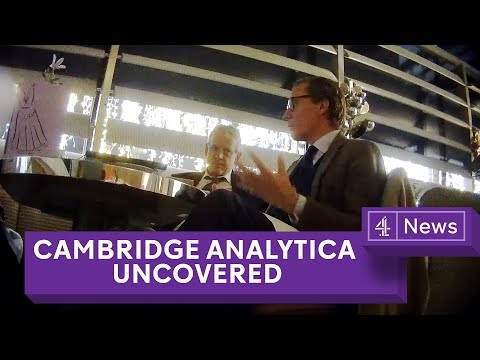
**Dr. Alex Tyler, Chief Data Officer at Cambridge Analytica, and Mark Turnbull, Managing Director, described the method of Cambridge Analytica in the Channel 4 recording as follows (not a literal translation):
If you collect data from people and analyze it (regarding behavior, interests, images they respond to, language, etc.), it gives you information on how to segment the population into groups. You then send messages to these groups about topics that concern them and to which they are receptive, with the images and language they respond to.
If it works in one country, it works elsewhere. We did this in Mexico, Malaysia, and currently are active in Brazil, China, Australia..."
"Oh, even in China?"
"Yes, but not politically."
It’s all about emotions, hopes, and fears. If you find out the hopes and fears of people, you can target them exactly at those points by triggering them there.
We also collect "dirt" on political opponents. We act very subtly and have contacts with people who can do this, former MI5 and MI6 personnel now working for private organizations."*[3]
Cambridge Analytica was therefore on the one hand a propaganda machine that influenced a target population by collecting personal data to induce behavioral change in a desired direction – and on the other hand organized discrediting campaigns in election influence via private intelligence services that spied on political opponents and publicly discredited them.
When it all came to light...
The scandal broke in 2018 when it became known that Cambridge Analytica had unlawfully obtained access to data of up to 87 million Facebook users without their consent.
Facebook then faced numerous legal and regulatory investigations and was eventually fined $5 billion by the Federal Trade Commission (FTC).
Cambridge Analytica itself filed for bankruptcy in 2018.
However, the bankruptcy is not the end of this type of manipulation.
Privacy advocates suspect that the company simply rebranded itself and that the influence operations are being continued both by Cambridge Analytica’s successor company and by other similar firms.[1] The New Yorker[2] The Guardian, Cambridge Analytica whistleblower: We spent $1m harvesting millions of Facebook profiles[3] YouTube video Channel 4: Cambridge Analytica Uncovered: Secret filming reveals election tricks (see below)
Only if you break it you can build something new from its shattered pieces that aligns with your vision of a new society."*
Cambridge Analytica whistleblower Christopher Wylie on the mindset of the Cambridge Analytica actors.
Cambridge Analytica was a company founded in 2013 by the British SCL Group.
The SCL Group was founded by the brothers Alexander Oakes and Nigel Oakes. Nigel Oakes had previously worked in TV production and advertising and had focused on mass psychology and influence. He founded the Behavioural Dynamics Institute (BDI), a non-profit subsidiary of the SCL Group, because he believed psychology could influence the masses better than traditional advertising.
The Behavioural Dynamics Institute (BDI) was led by Phillip M. Taylor, a professor of international communication at the Institute of Communications Studies at the University of Leeds. A number of other scientists from different disciplines were involved in the BDI’s research.
In advertising materials from the SCL Group, it was stated that the group knew how to use data for both psychological and political warfare.[1]
Among the investors in SCL was banker Paul David Ashburner Nix, whose son Alexander Nix became finance director of SCL Limited in 2004 and later also head of Cambridge Analytica.
Cambridge Analytica offered potential clients the ability to induce opinion and behavioral changes in target groups desired by the client based on data analysis and manipulation techniques.
The company was headquartered in New York City.
Alexander Nix was also director of the "Elections Division" at the SCL Group (SCL Elections) when Cambridge Analytica was founded. The founding of Cambridge Analytica was financed by billionaire Robert Mercer, whose daughter Rebekah Mercer was placed on the board of Cambridge Analytica.
Also involved in the founding of Cambridge Analytica was Stephen Bannon, editor of Breitbart News, a far-right online magazine also financed by Mercer. Bannon was friends with the Mercers; together, they pursued the goal of disempowering the political establishment in the US capital Washington. Initially, Ted Cruz was supported – and later Donald Trump, from whom they hoped would win the 2016 US presidential election.
The data used by Cambridge Analytica to manipulate the 2016 US elections in favor of Trump came from Facebook and was harvested through Facebook apps from the social media platform. The apps were developed by Aleksandr Kogan, a lecturer at Cambridge University.
Christopher Wylie said in an interview with the Guardian:
"These apps consisted of a quiz where the user had to grant access to their profile and the profiles of their friends. This gave the app access to all those profiles and allowed it to harvest all data… status updates, likes, in some cases even private messages… In 2-3 months, 50-60 million profiles were collected."*[2]
Using these Facebook data and developed algorithms, psychological profiles of the Facebook users were created:
"So we knew, once we had your information, which information you were receptive to and which triggers you were vulnerable to: framing, headlines, content, tone, whether fearful or not – these things…
…and where you would get this information from.
— and how often we had to show you the content for you to change your way of thinking about something."*
The team at Cambridge Analytica included data analysts, psychologists, and strategists, as well as a whole team of creatives: designers, videographers, photographers, etc. They designed content that was then sent to a targeting team that put it on the internet.
The external content was previously designed by psychologists and tailored to the personality profiles. It contained links to other sites with further content. This way, entire trails were laid on the internet to influence the thinking of Facebook users on specific topics in favor of the goals of Cambridge Analytica’s clients.
Cambridge Analytica worked for various clients and manipulated elections in several countries, such as in Africa, the 2016 US election in favor of Donald Trump, and the Brexit campaign in the UK. The Brexit campaign VoteLeave, supported by Boris Johnson, was a client of Cambridge Analytica, and the campaign Leave.EU, supported by Nigel Farage, also paid the company.
For some contracts, Cambridge Analytica also worked with external firms. For example, during election manipulation in Nigeria, the "Team Jorge" was involved, which had a wide range of offerings from hacking actions to staged attacks that could then be exploited in favor of the client. The "Team Jorge" consisted of former agents of Israeli special forces. Another Israeli company was the "Psy-Group", which, besides online campaigns and questionable software, also offered so-called "honey traps" (romantic traps). According to statements by Alexander Nix in a secret recording by Channel 4, very successful Ukrainian women were employed for this.
Clients were political parties, campaign organizations, and governments.
**Dr. Alex Tyler, Chief Data Officer at Cambridge Analytica, and Mark Turnbull, Managing Director, described the method of Cambridge Analytica in the Channel 4 recording as follows (not a literal translation):
If you collect data from people and analyze it (regarding behavior, interests, images they respond to, language, etc.), it gives you information on how to segment the population into groups. You then send messages to these groups about topics that concern them and to which they are receptive, with the images and language they respond to.
If it works in one country, it works elsewhere. We did this in Mexico, Malaysia, and currently are active in Brazil, China, Australia..."
"Oh, even in China?"
"Yes, but not politically."
It’s all about emotions, hopes, and fears. If you find out the hopes and fears of people, you can target them exactly at those points by triggering them there.
We also collect "dirt" on political opponents. We act very subtly and have contacts with people who can do this, former MI5 and MI6 personnel now working for private organizations."*[3]
Cambridge Analytica was therefore on the one hand a propaganda machine that influenced a target population by collecting personal data to induce behavioral change in a desired direction – and on the other hand organized discrediting campaigns in election influence via private intelligence services that spied on political opponents and publicly discredited them.
When it all came to light...
The scandal broke in 2018 when it became known that Cambridge Analytica had unlawfully obtained access to data of up to 87 million Facebook users without their consent.
Facebook then faced numerous legal and regulatory investigations and was eventually fined $5 billion by the Federal Trade Commission (FTC).
Cambridge Analytica itself filed for bankruptcy in 2018.
However, the bankruptcy is not the end of this type of manipulation.
Privacy advocates suspect that the company simply rebranded itself and that the influence operations are being continued both by Cambridge Analytica’s successor company and by other similar firms.[1] The New Yorker[2] The Guardian, Cambridge Analytica whistleblower: We spent $1m harvesting millions of Facebook profiles[3] YouTube video Channel 4: Cambridge Analytica Uncovered: Secret filming reveals election tricks (see below)